Contents
- Introduction to oligonucleotide labelling
- Components of a label
- Methods of oligonucleotide labelling
- 5'-phosphate oligonucleotides
- The 3'-phosphate group as a PCR blocker
- Biotinylated oligonucleotides and affinity capture
- 5'-Amino oligonucleotides and post-synthetic labelling
- 5'-Thiol oliognucleotides and alkaline phosphatase probes
- Indirect enzymic labelling of oligonucleotides
- Enzymatic labelling with terminal deoxynucleotidyl transferase (TdT)
Contents
Synthesis and applications of chemically modified oligonucleotides
Introduction to oligonucleotide labelling
Oligonucleotides are used in many biological and forensic applications as sequence-specific binding agents to reveal the presence of a specific target DNA sequence (e.g. in DNA sequencing and mutation detection). In such applications the oligonucleotide must be labelled, so that its presence can be identified. DNA and oligonucleotide probes can be labelled with radioactive nuclei via radioactive deoxyribonucleoside triphosphates (3H, 125I and 14C). These dNTPs can be incorporated directly into nucleic acid probes by enzymatic methods such as nick translation and 3'-end modification by terminal transferase. Radioactive labelling at the 5'-end is carried out by phosphorylation using γ32P-ATP and T4 polynucleotide kinase. Radiolabelling has the advantages of very high sensitivity. However, there are numerous disadvantages such as hazards in handing; short half-lives of some nuclei, expense and (in some cases) waste disposal problems. In addition, 32P-labelling using kinase enzymes can only be carried out on a very small scale. Consequently colorimetric, chemiluminescent, and fluorescent labels have become increasingly popular and have taken over from radiolabels in most applications.
Non-radioactive labels can be introduced into synthetic oligonucleotides (oligonucleotide-labelling) or into large DNA molecules during PCR or other in vitro biochemical methods. Oligonucleotide labelling by chemical methods can be carried out on a large scale (milligrams or more), whereas enzymic labelling relies on proteins such as Taq polymerase and is normally carried out on microgram scale.
For a label to be suitable for attachment to an oligonucleotide or DNA probe it should possess the following properties:
- The label should be easy to attach under mild conditions using a simple, cheap and reproducible protocol.
- The method of attachment should not interfere with the signal-generating properties of the label or affect the hybridization of the oligonucleotide/DNA to its target nucleic acid.
- The label should be detectable at low concentrations (using suitable instrumentation).
- In some cases it may be advantageous to add multiple labels to a single oligonucleotide; the label should be compatible with this.
- The label should be stable to hybridization conditions e.g. elevated temperatures (up to 96 °C), detergents, and aqueous buffers up to pH 9.
- The label should be stable to long term storage at −20 °C and be easily disposable.
- It should be possible to simultaneously detect several different labels simultaneously and to differentiate between them (multiplex detection).
This section focuses on oligonucleotide labelling, an active field in which huge progress has been made recently.
Components of a label
A label consists of three components: a signalling moiety, a spacer and a reactive group (Figure 1).
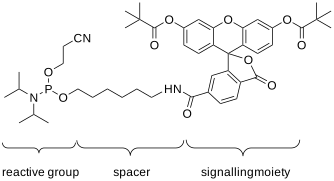
The signalling moiety is either a reporter molecule such as a fluorophore, in the above case (Figure 1) fluorescein (direct labelling); or a molecule that can generate a signal in a substrate e.g. an enzyme (indirect labelling). The spacer separates the luminescent moiety from the DNA and can be used to change the hydrophobicity or hydrophilicity of the molecule and alter the flexibility and spacing of the label relative to the DNA. This is sometimes necessary for efficient hybridization. The reactive group provides a means of attaching the label to an oligonucleotide. In the above example (Figure 1) this is a phosphoramidite group for use in solid-phase oligonucleotide synthesis.
Methods of oligonucleotide labelling
Examples of some common oligonucleotide labelling reactions are
- Reaction of a phosphoramidite derivative of the labelling group with the oligonucleotide during solid phase synthesis. (Figure 2a).
- Reaction of a free amino group on an oligonucleotide with an N-hydroxysuccinimide ester or other activated carboxyl group such as an isothiocyanate derivative of a luminescent dye or enzyme. This reaction produces a stable chemical bond such as an amide or thiourea linkage. (Figure 2b,c).
- Reaction of a thiol-modified oligonucleotide with an α,β-unsaturated ketone attached to a luminescent label or activated enzyme. (Figure 2d).
- Reaction of an amino-modified nucleoside triphosphate with a carboxy-activated label, and subsequent incorporation of the labelled triphosphate into DNA during PCR or other enzyme-catalysed DNA extension reaction (Figure 2e).
- Reaction of an alkyne-modified oligonucleotide with an azide-modified label, to form a triazole linkage (click chemistry) (Figure 2f).
- Reaction of an azide-modified oligonucleotide with an alkyne-modified label, to form a triazole linkage (click chemistry) (Figure 2g).
Figure 2 summarizes these methods of labelling.
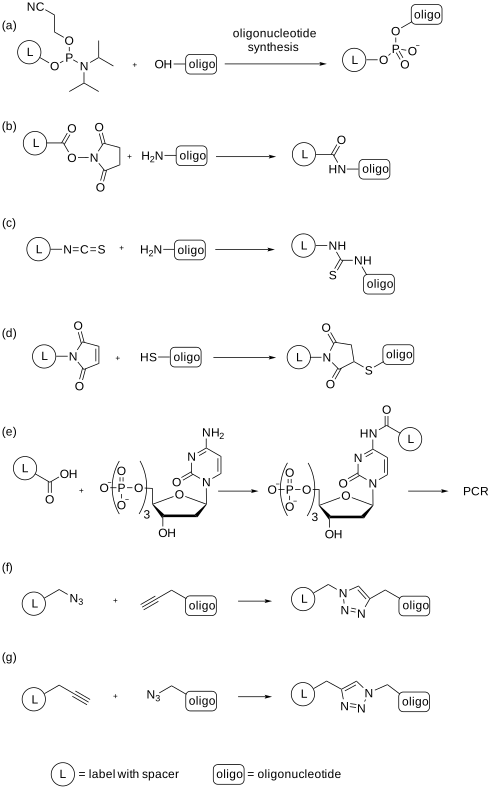
Labelling of synthetic oligonucleotides during solid-phase synthesis ((a) above) has the advantage that large quantities of labelled oligonucleotide can be prepared for major applications such as DNA diagnostics and forensic screening. The simplest way to label an oligonucleotide during solid-phase synthesis is to add the chemical modification to the 5'-end, although 3'-labelling and internal labelling are also possible using special phosphoramidite monomers/columns. The addition of labels to amino- or thiol-modified oligonucleotides after solid-phase synthesis (post-synthetic labelling, (b), (c) and (d)) is less efficient and requires care. Labelling a deoxy- or dideoxynucleoside triphosphate and incorporating the monomer during DNA polymerisation (e) is an enzyme-catalysed procedure and this is therefore a small scale method; however, it is a convenient technique for introducing a large number of labels into a DNA strand.
Some important methods of oligonucleotide labelling and applications of labelled oligonucleotides are described in more detail here. Fluorescent oligonucleotides represent a special group and their synthesis and applications are covered in the section on the synthesis and properties of fluorescent oligonucleotides.
5'-phosphate oligonucleotides
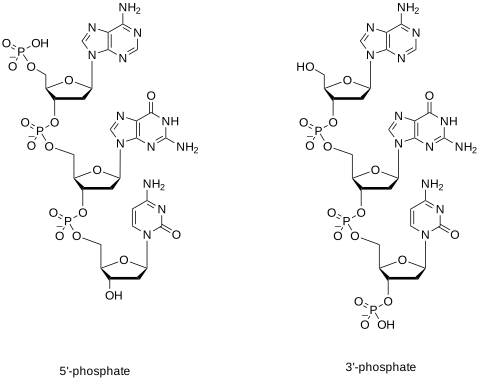
Oligonucleotides that have been synthesized by conventional solid-phase phosphoramidite methods have a primary hydroxyl group at the 5'-end (5'-OH). This is suitable for most applications but there are cases when it is necessary for the oligonucleotide to have a 5'-phosphate group (Figure 3, left).
Oligonucleotide ligation
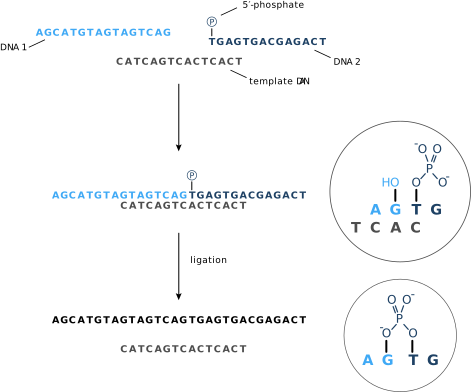
An example is the ligation reaction to join two oligonucleotides (or PCR products) together to form a longer piece of DNA. One of the oligonucleotides must be unmodified at its 3'-end and possess a 3'-hydroxyl group (DNA 1, blue in Figure 4) and the other must have a 5'-phosphate group attached (DNA2, green in Figure 4). The ligation reaction is catalysed by the enzyme DNA ligase and requires DNA1 and DNA2 to be brought together by simultaneous hybridization to a complementary template oligonucleotide. The ligation reaction is sometimes used to assemble genes from long oligonucleotides or PCR products (a 5'-phosphate group can be introduced into a PCR product simply by using a 5'-phosphate-labelled PCR primer). DNA 1 and DNA 2 can be any length, e.g. 100mer synthetic oligonucleotides or 500mer PCR products, whereas the template oligo need only be a short oligonucleotide of around 25 bases in length. Multiple ligation reactions can be carried out simultaneously using a mixture of DNA fragments and template oligonucleotides in order to assemble a long piece of DNA from several fragments. The product from multiple ligation reactions may not be very pure but it can be "cleaned up" by PCR amplification (see PCR).
Preparation of 5'-phosphate oligonucleotides
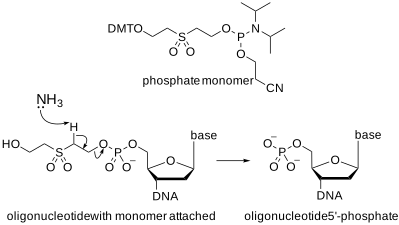
5'-Phosphate oligonucleotides are prepared using the monomer in Figure 5, a derivative of sulfonyldiethanol. During the normal deprotection of the oligonucleotide with aqueous ammonia, an acidic proton on the carbon atom adjacent to the sulfonyl group is lost to generate the desired 5'-phosphate oligonucleotide. With reference to the phosphate group this is a β-elimination reaction. The purpose of the DMT group on the phosphate monomer is to act as a colorimetric monitor of coupling efficiency on the DNA synthesizer.
The 3'-phosphate group as a PCR blocker
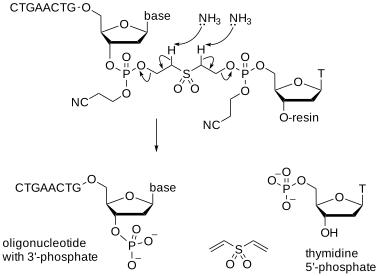
Fluorogenic oligonucleotide probes are used in PCR reactions to signal the presence of a specific PCR product (see PCR), and it is essential that such probes do not also act as PCR primers. PCR extension of an oligonucleotide requires the presence of a 3'-hydroxyl group (3'-OH) and any stable chemical modification at the 3'-end will prevent PCR amplification (i.e act as a PCR blocker). Oligonucleotides with 3'-phosphate groups (Figure 3, right) can be prepared for this purpose using the monomer shown in Figure 5. Solid-phase synthesis starts with any nucleoside attached to the resin (e.g. "T-column"). In the first cycle of synthesis the phosphate monomer is added, followed by assembly of the desired oliognucleotide sequence (Figure 6). During ammonia deprotection, the sulfonylethyl group of the phosphate monomer is cleaved on both sides of the sulfonyl group by β-elimination and the 2-cyanoethyl groups are also cleaved by the same mechanism (not shown in Figure 6). The resulting oligonucleotide has a 3'-phosphate and the by-product is a nucleoside with a 5'-phosphate group. The latter is a "small molecule" and is easily removed during the routine gel filtration clean-up of the oligonucleotide.
An excellent alternative to 3'-phosphate as a PCR blocker is 3'-propanol (propyl).
Biotinylated oligonucleotides and affinity capture
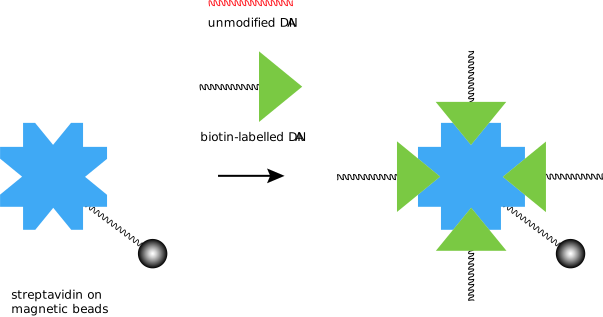
Biotin (vitamin B7; vitamin H) is widely used in molecular biology as an affinity label. It binds very tightly to the protein streptavidin and the pair form the strongest known non-covalent interaction between biomolecules. Four separate biotin molecules can bind simultaneously to a single molecule of streptavidin. The use of biotin for indirect labelling of oligonucleotides is discussed separately, but biotinylated oligonucleotides have other important uses. Biotin can be used to separate the two complementary strands of a PCR product. If a 5'-biotinylated primer is used in a PCR reaction the corresponding strand of the PCR product will be biotinylated. It can be separated from the unbiotinylated complementary strand by exposure to streptavidin-coated magnetic beads and adjustment of the pH of the buffer to denature the DNA duplex (pH > 11). The biotinylated strand is captured and the unbiotinylated strand remains in solution (Figure 7) together with various impurities. This is a useful technique for isolating one strand of a PCR product for further manipulation. The biotinylated single strand can be sequenced, cut up and used in cloning, or probed with a labelled complementary oligo etc.
Biotin can be added to the 5'-terminus of an oligonucleotide during solid-phase synthesis using the monomer in Figure 8.
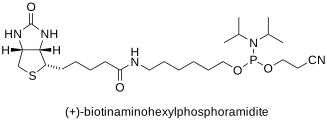
Slightly more efficient capture of the biotinylated oligonucleotide can be achieved if the hexyl spacer (C6) is replaced with a longer hydrophilic spacer such as tetraethylene glycol (C12). This allows the biotin moiety to reach more easily into its binding site in streptavidin.
5'-Amino oligonucleotides and post-synthetic labelling
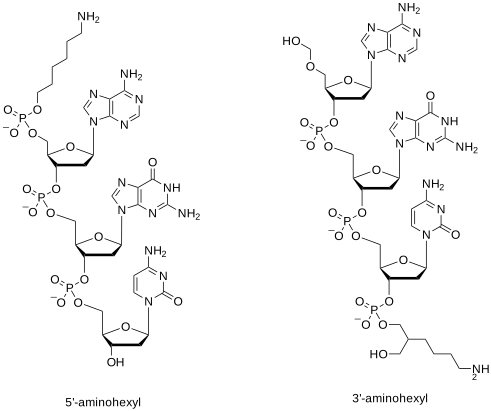
A chemical label can be added to 5'-amino functionalized oligonucleotide (Figure 9, left) by reaction of the NH2 group with an active ester to form a stable amide bond (Figure 10).
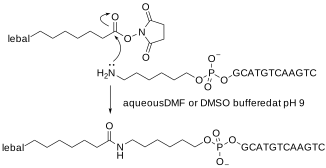
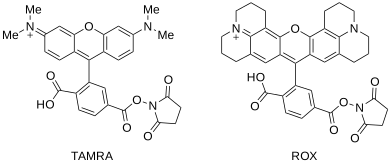
This is the most common method for introducing labels that are not stable to the conditions of oligonucleotide synthesis and/or deprotection. For example, the fluorescent rhodamine dyes TAMRA and ROX (Figure 11), which have been used in DNA sequencing, are unstable to the ammonia deprotection conditions, and therefore TAMRA and ROX labelling of oligonucleotides is done post-synthetically using this method. The use of such fluorescent labels is discussed in detail in the section on the Synthesis and properties of fluorescent oligonucleotides.
5'-Aminohexyl oligonucleotide synthesis
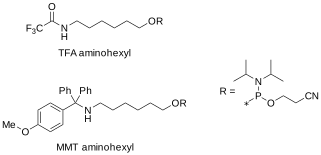
Which protecting group to use for the aminohexyl monomer is largely a matter of personal choice (Figure 12). If the monomethoxytrityl aminohexyl monomer is used the MMT protecting group can be removed from the labelled oligonucleotide on the DNA synthesizer during the final cycle of oligonucleotide synthesis by treatment with trichloroacetic acid. Cleavage of MMT gives a weak trityl colour which provides an indication of the coupling efficiency of the aminolink monomer. DNA synthesizers are set up to utilize the visible absorption or conductivity of a dimethoxytrityl group (DMT) to determine trityl yields quantitatively during normal oligonucleotide synthesis, and they greatly under-estimate the yield of the MMT cation produced by deprotection of the amine; however, this is not a serious issue provided that the operator is aware of it.
If the TFA aminohexyl monomer is used, the trifluoroacetyl protecting group is removed from the oligonucleotide during the normal ammonia deprotection step. This monomer has one disadvantage: the TFA protecting group is slightly labile during oligonucleotide synthesis and can be replaced at a low level by acetyl during the capping step in the final synthesis cycle.
The acetylated amine is not deprotected by aqueous ammonia used in oligonucleotide deprotection, as acetamides require much harsher hydrolysis conditions than trifluoroacetamides. Therefore, this side reaction permanently caps the amine and renders it unreactive to electrophiles (i.e. labelling reagents). This is not a serious side-reaction for 5'-amino-labelled oligonucleotides as the trifluoroacetamide is only exposed to a single capping step during solid-phase synthesis. However, this is a problem for oligonucleotides labelled at the 3'-end or internally with special TFA-protected amine monomers. In such cases the trifluoroacetamido group encounters acetic anhydride in multiple synthesis cycles.
Synthesis of oligonucleotides containing 3'- or internal amines
Amino groups can also be added at the 3'-end of oligonucletoides (Figure 9, right), or internally, allowing the attachment of amine-reactive dyes internally at different positions in the oligonucleotide.
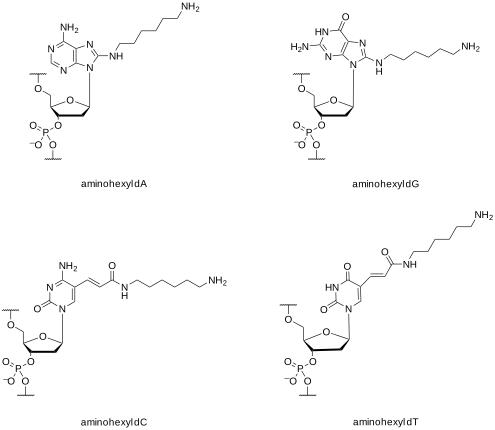
This requires amino-modified DNA bases (Figure 13).
5'-Thiol oliognucleotides and alkaline phosphatase probes
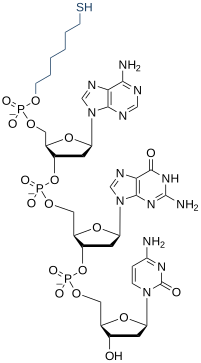
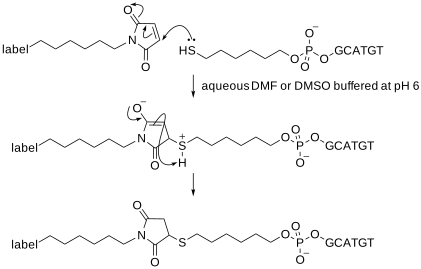
In some cases the reaction of a 5'-thiol oliognucleotide (Figure 14) with a Michael acceptor is the preferred labelling method. This is a rapid and selective reaction (Figure 15).
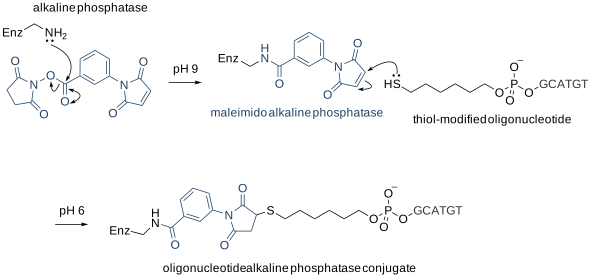
Conjugate addition of thiol-modified oligonucleotides been used to link oligos to enzymes such as alkaline phosphatase by first adding a maleimide moiety to an available amino group in the enzyme (e.g. a lysine side chain), then reacting the maleimide-functionalized enzyme with the thiol oligonucleotide. The oligonucleotide-enzyme conjugate must be carefully purified by gel filtration and anion-exchange chromatography to remove free oligonucleotide and free enzyme (the presence of free oligonucleotide leads to a decrease in signal, and free enzyme gives rise to a high background signal).
Oligonucleotide probes labelled with alkaline phosphatase are used in applications requiring colorimetric, fluorescent or chemiluminescent detection. The enzyme hydrolyses phosphomonoesters to produce inorganic phosphate and the corresponding alcohol. The target DNA is immobilized on a membrane and the alkaline phosphatase/oligonucleotide conjugate is added. Hybridization occurs on the surface and the substrate is added to produce a signal at the site of hybridization.
A clinically important version of this assay is known as in situ hybridization. Tissue samples are coated in wax, cut into thin slices and mounted on a microscope stage. Oligonucleotide alkaline-phosphatase conjugates are then added to the tissue sections and the colorimetric assay is performed. This assay is used to reveal the presence of specific RNA sequences, for example mRNA that is expressed at high levels in tumour cells (Figure 16).
A favoured substrate for alkaline phosphatase is 5-bromo-4-chloro-3-indolyl phosphate/nitro blue tetrazolium (BCIP/NBT). Dephosphorylation of the indole causes a change in pH leading to protonation of the tetrazole which precipitates as an insoluble blue dye. The enzyme turns over many molecules of substrate thus giving a very strong signal. Alternatively, detection limits as low as 1 attomole (10−18 mol) can be achieved if a chemiluminescent substrate is used. Many alkaline phosphatase probes can be used in combination at various sites on the target mRNA to further increase sensitivity.
5'-Thiol oligonucleotide synthesis
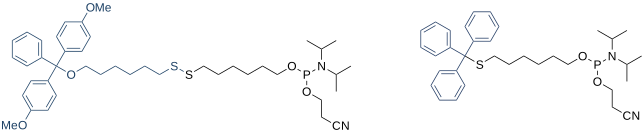
5'-Thiol oligos are synthesized by incorporating a thiol phosphoramidite at the end of solid-phase oligonucleotide synthesis. Thiols are strongly nucleophilic and, left unprotected, would interfere with phosphoramidite chemistry, so the thiol group must be protected throughout solid-phase synthesis. Two protecting groups are commonly used to protect thiols in oligo synthesis: the disulfide group and the trityl group (Figure 17).
5'-Thiol oligonucleotide synthesis using disulfide protection
After oligonucleotide synthesis using the disulfide-protected phosphoramidite monomer, and deprotection, the disulfide protecting group can be removed by reaction with a reducing agent such as dithiothreitol (DTT), to yield the free thiol (Figure 18). Gel filtration is then carried out to remove excess DTT.
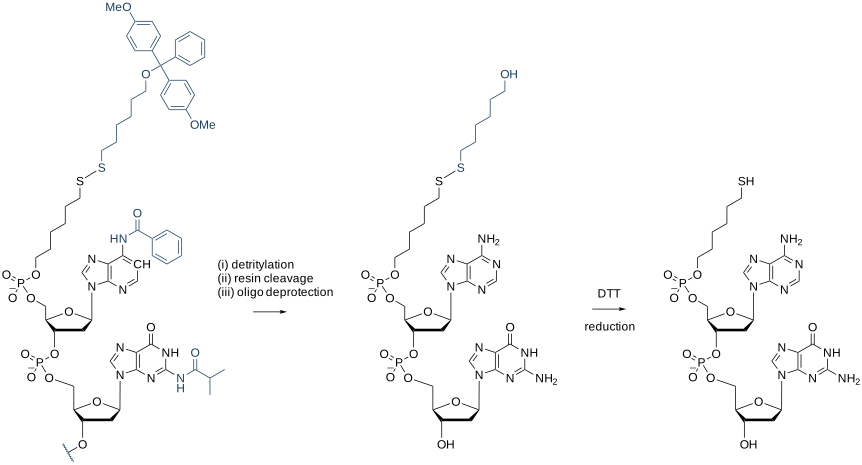
Disulfide-protected oligos should be deprotected just before use, to prevent the deprotected oligos from forming disulfides in solution.
5'-Thiol oligonucleotide synthesis using trityl protection
Following oligo synthesis using the trityl-protected phosphoramidite monomer, and deprotection, the trityl group is removed by reaction by reaction with silver nitrate. Excess silver nitrate is then removed by treatment with DTT (which forms an insoluble complex with silver, Figure 19). Finally, excess DTT is removed by gel filtration.
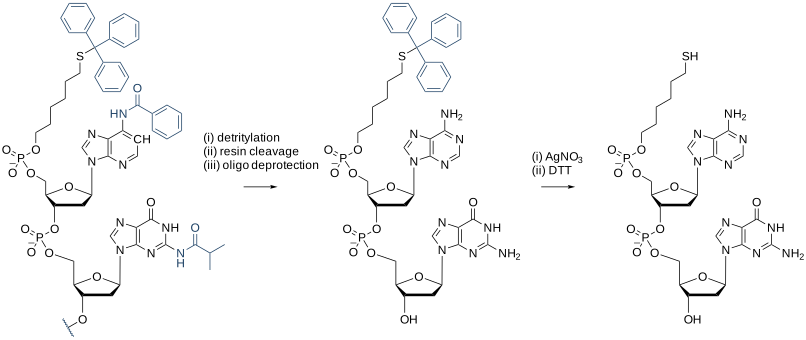
One problem with the trityl protection method is that the DNA sticks to the DTT-silver precipitate, which tends to result in low oligonucleotide yields. As treatment with DTT (to remove excess silver) is necessary anyway, the disulfide protection method (which also requires the use of DTT, but not silver) is a cleaner method for the synthesis of thiol-modified oligonucleotides, and typically gives better yields.
### Order of deprotection: thiol deprotection after oligo deprotection
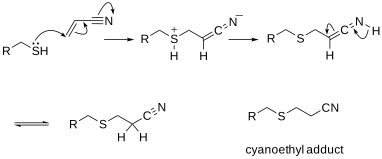
If the sulfur of the thiol oligonucleotide is deprotected before the ammonia deprotection step, the thiol will react with the acrylonitrile liberated by deprotection of the cyanoethyl phosphotriesters (Figure 20). This potentially serious side-reaction is avoided by leaving the trityl protecting group on sulfur during the ammonia treatment and removing acrylonitrile from the oligonucleotide by evaporation or gel-filtration before the free thiol is liberated.
Indirect enzymic labelling of oligonucleotides
Direct labelling of oligonucleotides with enzymes is a very effective method of preparing labelled probes. However, the physical properties of enzyme-labelled oligonucleotides are dominated by the limited thermal stability of the protein. For example, enzyme-labelled oligonuclotides cannot be used in PCR, as the high temperatures encountered in the PCR cycle lead to denaturation of the enzyme. Oligonucleotide hybridization conditions that require high temperatures are unsuitable for the same reason. Indirect methods of labelling oligonucleotides with enzymes have been developed to circumvent this problem. Such methods allow an oligonucleotide to be used in a biochemical or biophysical process (usually hybridization to an immobilized target nucleic acid) then labelled with an enzyme for detection. The oligonucleotide must be labelled with a small molecule that has a high affinity for a specific protein. The most common example is the incorporation of a hapten into the oligonucleotide probe. A hapten is a molecule that binds tightly to a specific antibody. In oligonucleotide labelling the antibody is usually conjugated to an enzyme such as alkaline phosphatase or horseradish peroxidase. The oligonucleotide becomes labelled with the enzyme on addition of the hapten-labelled oligonucleotide to the enzyme-labelled antibody. Detection is then achieved by addition of a substrate which is converted by the enzyme into a colourimetric, chemiluminescent or fluorescent product (Figure 21).
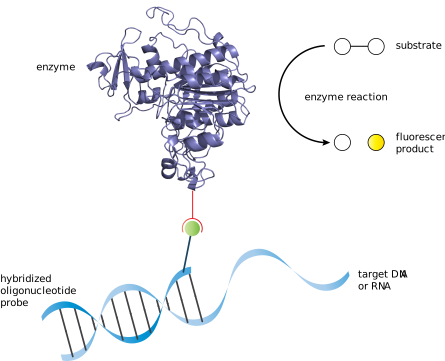
The target nucleic acid can be DNA (e.g. a PCR product), but it is more commonly mRNA. The levels of mRNA in biological samples can be very high, so, unlike genomic DNA, amplification of the nucleic acid target is unnecessary. The target nucleic acid can be immobilized on a membrane (nylon or nitrocellulose) or embedded in a wax tissue section (see fluorescence in situ hybridization).
The use of an enzyme to produce a signal has an obvious advantage: each molecule of the enzyme can react with (turn over) many substrate molecules and produce a very intense signal.
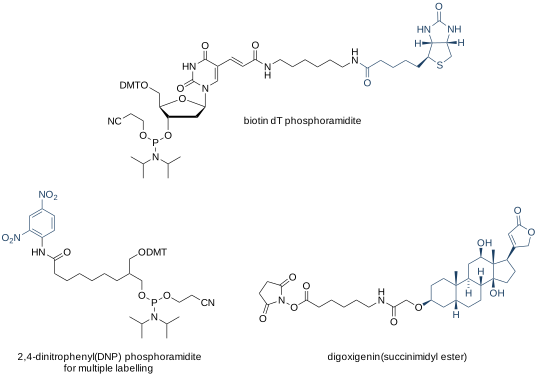
The most commonly used haptens are digoxigenin (DIG) and the dinitrophenyl (DNP) group. Digoxigenin is a natural product from the highly toxic foxglove plant (Digitalis) and DNP (2,4-dinitrophenyl) is an extremely immunogenic chemical group, and therefore highly-specific antibodies are easy to produce. Biotin is also used in this context because of its ability to bind very tightly to the protein streptavidin. Digoxigenin is not stable to the conditions of oligonucleotide synthesis, so the NHS carbonate of digoxigenin must be added to amino-modified oligonucleotides post-synthetically. DNP labelling of oligonucleotides is readily achieved by the use of a number of commercially available phosphoramidites. The DNP monomer in Figure 22 is used to add multiple DNP groups to the 5'- and 3'-termini of oligonucleotides. The phosphoramidite used to add biotin to the 5'-end of oligonucleotides is shown in Figure 22. The biotin dT phosphoramidite can be used to add biotin to any thymidine site in an oligonucleotide without disrupting base pairing. Such nucleoside based labelling monomers, although versatile, are extremely expensive. The biotin dT monomer costs hundreds of pounds/dollars/euros for 100 mg.
Biotin, digoxigenin and DNP can also be attached to deoxynucleoside triphosphates and used in PCR or other biochemical processes to label DNA strands.
Enzymatic labelling with terminal deoxynucleotidyl transferase (TdT)
Terminal deoxynucleotidyl transferase (TdT), or simply terminal transferase, is a DNA polymerase that adds nucleotides to the 3'-hydroxyl of single-stranded DNA, without requiring a template strand. The source of the nucleotides is a nucleoside triphosphate (dNTP).
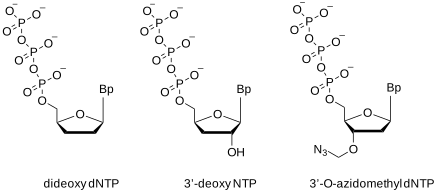
The product of the terminal transferase reaction is itself a substrate for the terminal transferase enzyme, so the reaction is a polymerization and can continue to add multiple nucleotides. Sometimes this is desirable, and is called tailing. Alternatively, the reaction can be restricted to a single nucleotide addition by using triphosphates that either lack a 3'-hydroxyl group (e.g. dideoxy NTPs, or 3'-deoxy NTPs) or triphosphates that are protected at the 3'-hydroxyl group, such as the 3'-O-azidomethyl dNTPs used in reversible terminator sequencing (Figure 23).
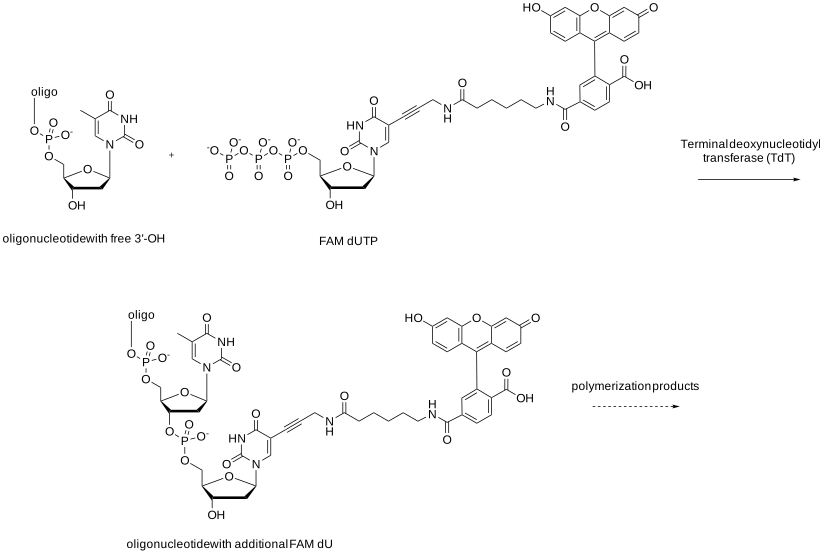
Terminal transferase is most efficient with unmodified dNTPs, but can also incorporate modified nucleotides when supplied with modified dNTPs. For example, DNA can be labelled at the 3'-end by treatment with FAM dUTP in the presence of terminal transferase; the product of the reaction has at least one extra base and is fluorescent (Figure 24).
The ability of terminal deoxynucleotidyl transferase to add single bases to the 3'-end of oligonucleotide in a controlled fashion has inspired researchers to investigate its potential in enzymatic DNA synthesis, and several companies aiming at commercializing enzymatic oligonucleotide synthesis have been established recently.